Vertical Integration
From genetics in the field to flexitanks at the port, from BRL credit to RMB settlement — Eutopio operates one continuous chain instead of brokering across many.

Eutopio is a Brazil–China trade and infrastructure platform integrating capital, logistics, technology, and market access into one operating model — built around one of the most significant trade corridors in the world.
Most commodity traders capture margin between buyer and seller. Eutopio integrates every layer of the trade — financing, agricultural technology, processing, logistics, settlement, and traceability — into one verifiable system. We don't speculate on flows. We build them. Inspired by Venetian merchants, who built ships, financed cargo, established banks, opened trading posts, and integrated every link of the chain — we apply the same model to the Brazil–China corridor.
From genetics in the field to flexitanks at the port, from BRL credit to RMB settlement — Eutopio operates one continuous chain instead of brokering across many.
Dual headquarters in Jundiaí and Shanghai, with parallel teams on both supply and demand sides of the corridor — supported by the broader group: Pontix (technology), Notee (consumer), Venetia (construction).
Two RMB settlement channels — Offshore RMB (CNH) via Banco do Brasil London, and CIPS-enabled settlement via BOCOM BBM Hong Kong — backed by the BRL 157 billion bilateral swap framework.
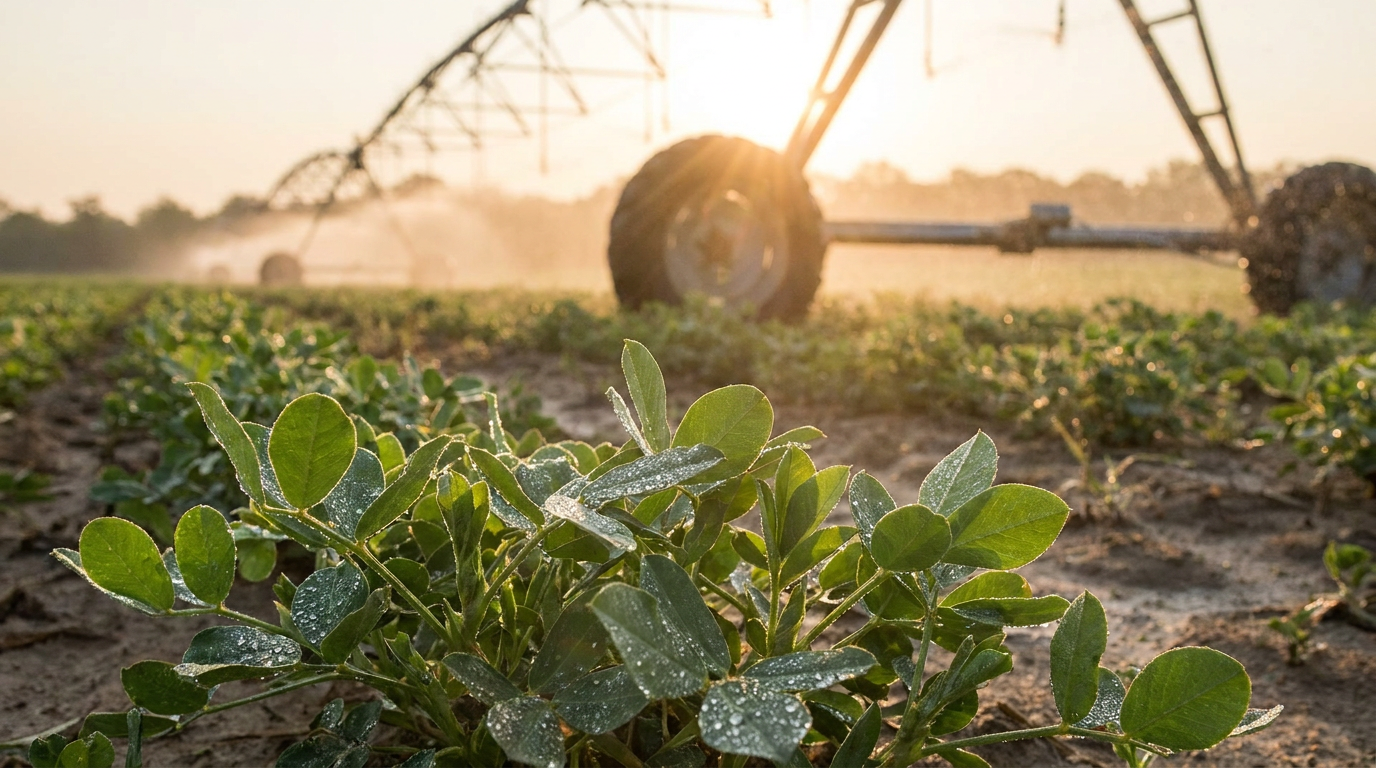
Digital twin platform (Pontix), high-oil seed genetics (>55%), LiDAR field mapping, multi-depth soil sensors, closed-loop irrigation — reducing water use by 30–50% and extending growing cycles.
Every shipment recorded on Axiom — a permissioned blockchain and API-based traceability platform — covering farm origin, agronomic inputs, processing timelines, lab certifications, container ID, and shipment milestones.
Our market entry is deliberate. We chose a corridor where structural drivers are already in place, and a category — peanut oil — that is fragmented enough to allow rapid share capture and large enough to anchor a real platform.
Starting with peanut oil. China is the world's largest crude peanut oil importer; Brazil is competitive on price and significantly under-positioned on share. Our entry point is here.
Adjacent edible oilseeds and grains. A natural extension of peanut oil — sharing producer relationships, financing structures, and quality systems.
From China to Brazil. Through Pontix and Chinese university partnerships, we deploy proven Chinese agricultural technology to Brazilian growers in our supply network.
Eutopio works with banks, governments, investors, regulators, suppliers, buyers, and service providers. Choose your path below.
Structured trade finance, RMB/BRL settlement, expanding margin, and a bankable corridor.
Investor & Banking InquiriesBilateral integration, regulatory compliance, and measurable benefit to Brazil.
Government AffairsCompetitive financing, agri-tech deployment, and forward contracts.
Partner with UsLocal currency settlement, traceable supply chain, single counterparty.
Buy from UsEutopio aspires to be recognized globally as a trading architect — a company that thinks beyond conventional boundaries, and that plans, designs, and builds the next-generation global trade ecosystem.